.png?width=749&height=158&name=Samatrix+Logo%20(1).png "Samatrix Logo")

.png?width=400&height=84&name=Samatrix+Logo%20(1).png)
Combined sewer systems are designed to carry both wastewater and rainwater through a single network. Within these systems, combined sewer overflows (CSOs) act as relief points for when the influx of water outstrips processing and treatment capacity. Their role is to discharge excess flow into a watercourse when heavy rainfall pushes the network beyond its limits, helping prevent sewage backing up into streets or houses. To be effective, this design relies on maintaining flow capacity to prevent overload. When inappropriate materials such as nappies and wet wipes enter the system, however, the balance is disrupted, often in ways that are not immediately visible, but are nevertheless operationally significant.

In this article, we look at the hidden impact of wet wipes and nappies on CSOs.
Why do disposable wipes clog sewers so easily?
Disposable wet wipes clog up sewers because they are not designed to disintegrate in water. Unlike toilet paper, which breaks apart quickly when flushed, wipes are typically made from synthetic fibres such as polyester and polypropylene. These materials retain their strength and integrity when wet, allowing them to remain intact as they move through the U-bend.
This durability is great when cleaning stubborn pasta sauce stains off a grubby baby, but becomes a problem when used wipes begin to accumulate in the sewer. Wipes can snag on rough surfaces or structural joints within pipes, forming the base of larger blockages. Over time, these masses combine with fats and other debris to create ‘fatbergs’, dense obstructions that restrict fluid flow and often require mechanical removal. Some of these fatbergs are truly monstrous in proportions, with examples found weighing over 100 tonnes and extending for more than a kilometre in length.
How does this tie in with combined sewer overflow problems?
Nappies and wipes introduce extra bulk and resilience into a system designed for fluid movement. Unlike organic waste, these materials do not compress or break down easily. As blockages and fatbergs develop, the effective capacity of the sewer network is reduced. Even partial obstructions can slow local flow rates, increasing the likelihood that the system will reach its limit during rainfall, and a large fatberg can cause extensive flooding. This creates combined sewer overflow problems not by increasing water inflow, but by reducing the system’s ability to handle it.
What happens when these blockages reach combined sewer overflows?
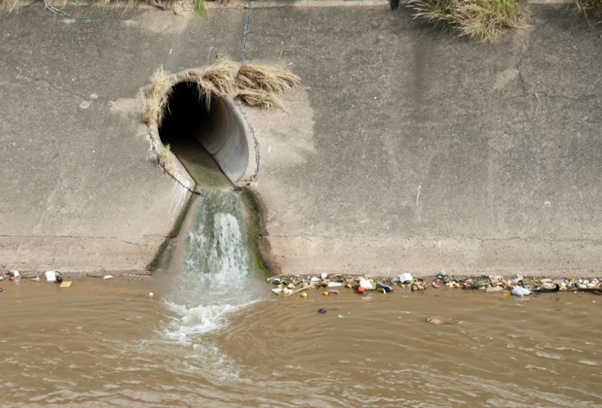
Combined sewer overflows are triggered when the flow exceeds system capacity. When that capacity is reduced by blockages, the threshold for activation is reached more quickly and more frequently, meaning even moderate rainfall can lead to overflow events. This changes how the system behaves day to day. Instead of acting as an occasional safeguard against surplus capacity, nappy-blocked combined sewer overflows may begin to operate as a routine outlet during heavy rain. The presence of wipes and nappies upstream accelerates this shift, allowing constrained flow conditions to persist even outside peak storm periods.
The impacts of combined sewer overflows on a large urban river
A good example of the risk posed by wet wipes and nappies can be seen in the increasing number of pollution incidents affecting urban rivers. When an overflow occurs, the contents of the sewer system are discharged into receiving waters. Act for Ealing, a clean water advocacy group in Greater London, has reported that wipes are now a visible and persistent form of pollution along urban waterways in the capital, often accumulating on riverbanks and among vegetation. This is partly due to their material composition. Because many wipes contain plastic fibres, they do not biodegrade in the same way as organic waste. As a result, the impacts of combined sewer overflows on a large urban river can extend beyond water quality to long-term environmental contamination, with materials remaining in the ecosystem long after discharge. This is one of the reasons that Act for Ealing and other urban charities are calling for a ban on non-biodegradable wipes and sanitary products.
What does this mean for sewage treatment systems?
The presence of non-flushable materials also has implications beyond the sewer network itself. At the sewage treatment stage, wipes and similar solids must be painstakingly removed through screening and mechanical processes, increasing operational demand and expense. High volumes can overwhelm equipment or require more frequent maintenance interventions. In isolation, a single wipe or nappy carelessly flushed may seem insignificant. At scale, however, their impact is cumulative; restricting flow, increasing overflow frequency, and introducing persistent pollutants into the environment.
To find out more and discover how Samatrix can help, please call 01792 949484, or click here to message one of our team.
Image Source: AI Image
What Causes Sewage Pollution: Industrial & Structural Factors?
Understanding Combined Sewer Overflows